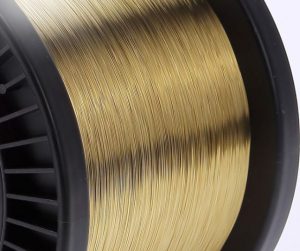
Brass wire is a type of wire made from an alloy of copper and zinc. It combines the properties of both metals, offering a unique set of characteristics and making it suitable for various applications. Here are some key features and uses of brass wire:
- Corrosion resistance: Brass wire has good resistance to corrosion, especially in comparison to pure copper wire. The addition of zinc to the copper alloy enhances its resistance to tarnishing and oxidation, making it suitable for applications in humid or corrosive environments.
- Electrical conductivity: Brass wire exhibits excellent electrical conductivity, although it is slightly lower than that of pure copper wire. This makes it suitable for electrical and electronic applications where conductivity is important, such as in wiring, connectors, and electrical components.
- Strength and durability: Brass wire has good tensile strength and durability, allowing it to withstand mechanical stress and deformation. It can be formed, bent, and shaped without easily breaking, making it suitable for applications that require flexibility or structural integrity.
- Aesthetic appeal: Brass wire has a warm and attractive golden color that adds aesthetic appeal to various applications. It is commonly used in jewelry making, decorative arts, and craft projects due to its visual appeal and workability.
- Versatility: Brass wire is available in different diameters and tempers, including soft, half-hard, and hard, providing versatility for various applications. It can be easily bent, soldered, and manipulated, making it suitable for wire sculptures, model-making, and other creative endeavors.
- Antimicrobial properties: Brass wire has natural antimicrobial properties, with studies showing that brass surfaces have the ability to reduce the survival of bacteria and viruses. This makes it useful in applications where hygiene is crucial, such as in healthcare settings, touch surfaces, and filtration systems.
Common applications of brass wire include:
- Jewelry and accessories: Brass wire is widely used in jewelry making for creating wire-wrapped designs, chainmaille, findings, and decorative elements. It offers an affordable alternative to gold wire while still providing an attractive appearance.
- Musical instruments: Brass wire is used in various musical instruments, such as brass instruments (trumpets, trombones, etc.) and string instruments (guitar strings, harp strings), due to its acoustic properties and workability.
- Craft and art projects: Brass wire is popular in craft projects, sculptures, wire art, and model-making due to its versatility and aesthetic appeal.
- Electrical and electronic applications: Brass wire is used in wiring, connectors, terminals, and electrical components that require good conductivity and corrosion resistance.
- Industrial applications: Brass wire finds use in industrial applications like springs, fasteners, mesh screens, filtration systems, and decorative wirework.
Overall, brass wire offers a combination of strength, corrosion resistance, electrical conductivity, and aesthetic appeal, making it a versatile material for a wide range of applications in various industries.